Home / Thatching
Changing times.
For better, or worse, thatching has entered the 21st century in an industrial way.
Home / Thatching
For better, or worse, thatching has entered the 21st century in an industrial way.
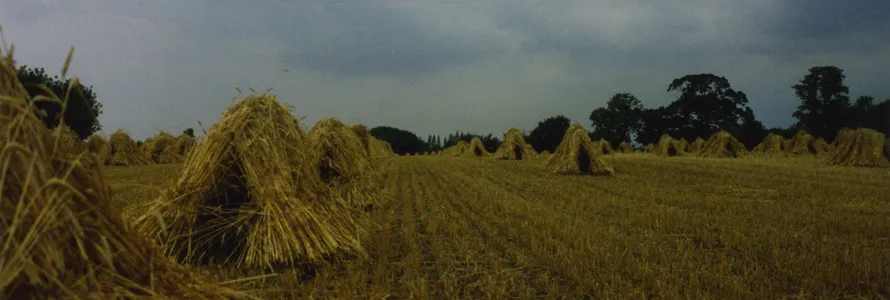
From the late 1940s through the 1950s & 60s the world of thatching underwent a big change. The availability of thatching straw that had been a by-product of general agriculture, and readily available, started to diminish.
The introduction of the combine harvester began to rapidly replace the reaper-binder and threshing drum across the country, and with them went straw suitable for thatching. The thatching industry was in real danger of serious decline.
To combat this threat the Rural Industries Bureau organised the formation of regional thatchers associations. Combed wheat reed was introduced into Central and Midland counties from the West Country as a replacement for drum threshed straw, and with it a different style and method of thatching was taught.
The majority of straw roofs outside the eastern counties are now of combed wheat reed thatched in the West Country style, with rolled-off eaves and gables. This style is technically more suitable for the slacker roof slopes of the West Country. Apart from a change in straw type and style across central counties, traditional methods of fixing remained the same as they had for generations.
From the late 1970s, early 1980s more change occurred. Steel rod began to replace the hazel sways that had been used to secure reed and straw to roof timbers. Tarred twine was replaced by polypropylene baler twine.
Imported water reed began to dominate the market, moving into the gap left by dwindling supplies of Norfolk reed. These days hardly any native reed is used outside the eastern counties. Reed is now imported from as far away as China.
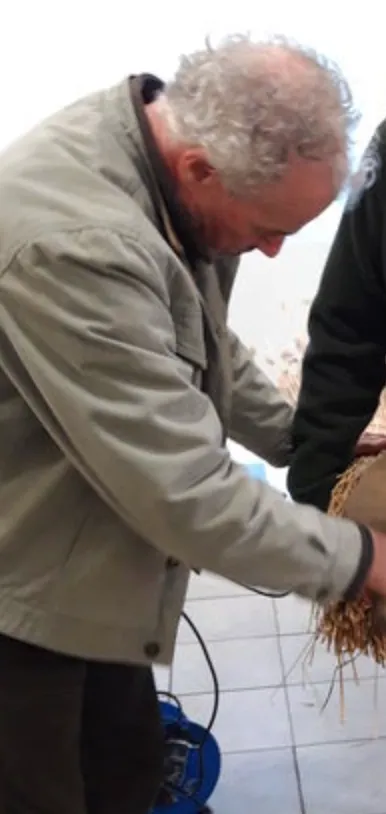 Photo: greatfen.org.uk
Vast amounts of pre-twisted hazel spars made in Eastern Europe are now imported into the UK, replacing hazel spars made in Britain by highly skilled spar makers. Hand split hazel rods used for ridging have been widely replaced by timber-yard quadrant and sawn ash rods.
For better, or worse, thatching has entered the 21st century in an industrial way.
Contact
Bedfordshire, Buckinghamshire, Hertfordshire, Northamptonshire and Oxfordshire, and a number of interesting projects far further afield. Re-thatching, roof surveys, consultancy and advice.